
The NHS has committed to becoming a net zero health service, and for organisations supplying goods and services to the NHS, sustainability is now a procurement requirement, not a future ambition. Through initiatives such as the NHS Net Zero strategy, Carbon Reduction Plans (CRPs) and the Evergreen sustainable supplier assessment, the NHS is placing increasing emphasis on how suppliers measure, manage and reduce their carbon emissions.
For NHS suppliers, understanding what NHS Net Zero really means in practice is essential. From evidencing Scope 1, Scope 2 and Scope 3 emissions, to demonstrating progress through credible carbon reduction targets and product-level sustainability data, expectations are rising across tenders and pre-qualification questionnaires.
In this article, Pineapple explores how NHS net zero requirements are affecting the supply chain, what the Evergreen supplier assessment involves, and how suppliers can turn carbon targets into practical, measurable action. Drawing on our experience as a furniture supplier for the NHS, we outline the steps organisations can take to align with NHS sustainability expectations and remain competitive in a rapidly evolving procurement landscape.
As part of the NHS’s Delivering a Net Zero National Health Service strategy, the NHS has committed to achieving net zero by 2040 for emissions it directly controls, and net zero by 2045 for emissions it can influence, including its supply chain.
Supply chain emissions are significant. Procured goods and services account for approximately 62% of the NHS’s total carbon footprint, with medical and non-medical equipment forming a substantial proportion of this total.
The NHS is therefore focusing on decarbonising the supply chain, encouraging the adoption of lower-carbon product alternatives and expecting suppliers to decarbonise their own operations.
As a manufacturer supplying the NHS, Pineapple have noticed an increased focus on Sustainability and Carbon emissions in tenders and pre-qualification questionnaires, with increasing weight given to organisations which can evidence their current carbon footprint and provide goals relating to reducing their carbon footprint in the form of a Carbon Reduction Plan (CRP). By doing so, the NHS have been gradually incentivising those organisations who are able to demonstrate an understanding of their carbon emissions, and a desire to make improvements.
The NHS has published a supplier roadmap to help organisations align with these ambitions through to 2030 and beyond.
These requirements align with UK Government Procurement Policy Notes, including PPN 006, which requires consideration of Carbon Reduction Plans in major public sector procurement, and the updated PPN 002 social value framework.
Meaningful carbon reduction begins with accurate measurement. Establishing a baseline enables organisations to set credible targets, track progress, and understand how future decisions may affect their carbon footprint.
The Greenhouse Gas Protocol divides emissions into three scopes:
At Pineapple, this involved analysing emissions from company vehicles, electricity usage, waste and recycling, transport and distribution, employee commuting, business travel and products. Activity data was then converted into CO₂e using official government conversion factors.
Product-level carbon analysis followed, providing greater insight into which products carried the highest emissions and where reduction efforts could have the greatest impact.
Clear afterlife plans were also developed, outlining the most sustainable routes for reuse, recycling or disposal once products reach the end of their useful life.
Within Pineapple’s business, products account for approximately 60% of total emissions, making product design a critical focus area.
Understanding product emissions requires a Life Cycle Analysis (LCA), which considers carbon emissions across the entire life cycle of a product, from raw material extraction and manufacturing, through transport and use, to end-of-life disposal.
Product longevity is particularly important. A low-cost, disposable product may have a smaller initial carbon footprint, but frequent replacement can result in higher cumulative emissions than a more durable alternative.
This is especially relevant in mental health environments, where furniture is often subject to harsher use than in domestic settings. Robust, well-engineered products may deliver lower overall emissions over time, as well as reduced total cost of ownership.
Designing products to be repairable rather than disposable further extends their life cycle, avoiding the emissions associated with manufacturing replacements and disposing of damaged items.
Materials vary significantly in their carbon impact, depending on extraction methods, processing requirements, durability and end-of-life options.
Sustainably sourced wood, certified by organisations such as FSC or PEFC, can store more carbon within the product than is emitted during production. Engineered wood products, including MDF and MFC, make effective use of waste wood, although energy use and synthetic binders still contribute to environmental impact.
Plastics typically have a higher initial carbon burden due to fossil fuel extraction and processing. However, where robust recycling infrastructure exists, plastics can contribute to a circular economy, allowing materials to be reused multiple times.
Pineapple’s Ryno range, manufactured from recycled low-density polyethylene, demonstrates this approach. Incorporating recycled content has delivered measurable reductions in energy use and carbon emissions per product.
Material innovation continues with alternatives such as cork, used in Pineapple’s acoustic panels. Harvested without damaging the tree and sourced from wine stopper production waste, cork is widely regarded as a carbon-positive material and can be recycled again at end of life.

Although products represent the largest proportion of emissions, operational activities still account for around 40% of Pineapple’s carbon footprint. These include transport, energy use, waste management and employee commuting.
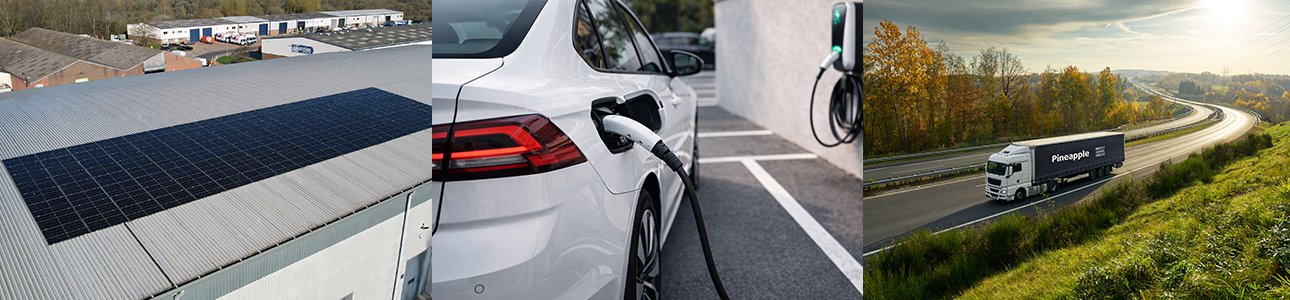
Targeted measures have delivered meaningful reductions. By consolidating freight and optimising logistics, Pineapple reduced transport-related emissions by 40 tonnes of CO₂ year on year. Electric vehicle charging points and secure bicycle storage were introduced to encourage lower-carbon commuting.
Solar panels installed on production facilities have reduced reliance on grid electricity, while returning packaging materials for sorting and recycling has delivered both environmental and cost benefits.
To achieve its net zero ambition, the NHS is using procurement as a catalyst for supplier decarbonisation. Suppliers that fail to measure, manage and reduce their emissions risk being unable to compete for future contracts.
Pineapple Contracts has embraced this challenge by investing directly in sustainability across its operations. The business has established a dedicated sustainability team, introduced product-level carbon analysis, implemented Life Cycle Analysis in design, and developed afterlife plans for its products. Operational initiatives include optimising transport and logistics, installing solar panels, supporting low-carbon commuting, and ensuring packaging is returned and recycled efficiently.
By combining robust measurement with efficient product design, responsible material selection and operational improvements, Pineapple has created a credible Carbon Reduction Plan that aligns with NHS expectations and demonstrates tangible progress.
For NHS suppliers, sustainability is no longer optional; it is central to long-term resilience, competitiveness and partnership with a health service committed to a low-carbon future.
Read more about our sustainability goals: https://uk.pineapplecontracts.com/sustainability-page/

