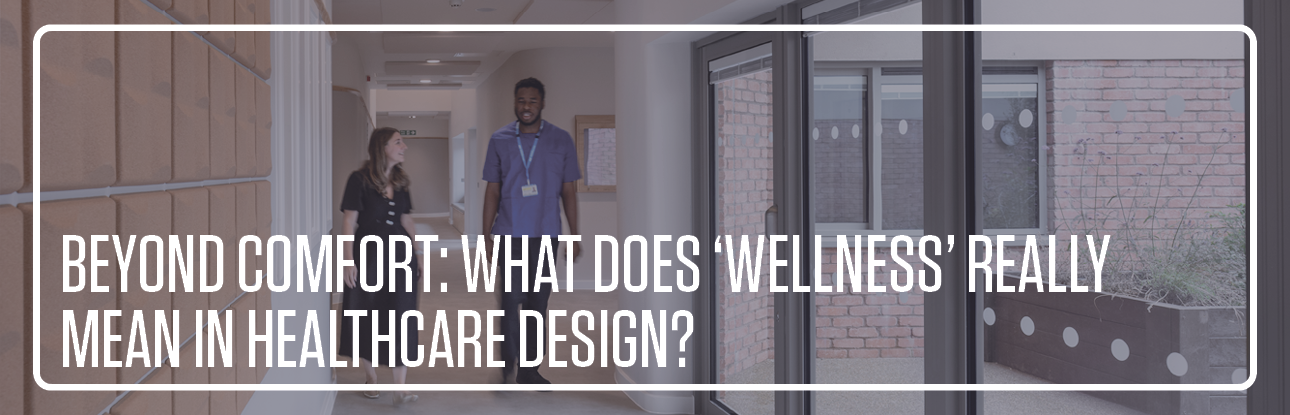
August marks National Wellness Month, providing an opportunity to think more broadly about what wellbeing really means – including the role our surroundings can play in shaping how we feel.
In healthcare environments, wellness goes beyond creating a space that simply looks calm or comfortable. It is about considering how the whole environment can support the people using it, from comfort and safety to dignity, choice, privacy and connection.
So, what does designing for wellness really look like?
Safety will always be a fundamental consideration within healthcare design, particularly in mental health and other challenging environments. But creating a safe environment doesn’t necessarily mean creating an institutional one.
The Center for Health Design has highlighted the importance of looking beyond physical safety alone within behavioural and mental healthcare, considering how environments can also feel therapeutic, supportive and less institutional.
Furniture has an important role to play in achieving this balance. Thoughtful forms, supportive seating, softer finishes and carefully considered materials can help spaces feel more comfortable and familiar while still addressing practical requirements such as durability, hygiene, infection control and safety.
The aim shouldn’t simply be to reduce risk, but to create environments in which people can feel comfortable, valued and supported.
Wellness is also closely linked to having some degree of choice and control.
Within many healthcare environments, people naturally have less control over their surroundings than they would at home. Even seemingly small choices – such as where to sit, whether to spend time alone or with others, or how to use a communal space – can therefore become particularly meaningful.
Research into healthcare environments has identified autonomy, alongside comfort, safety, privacy and social interaction, as an important part of how patients experience a space.
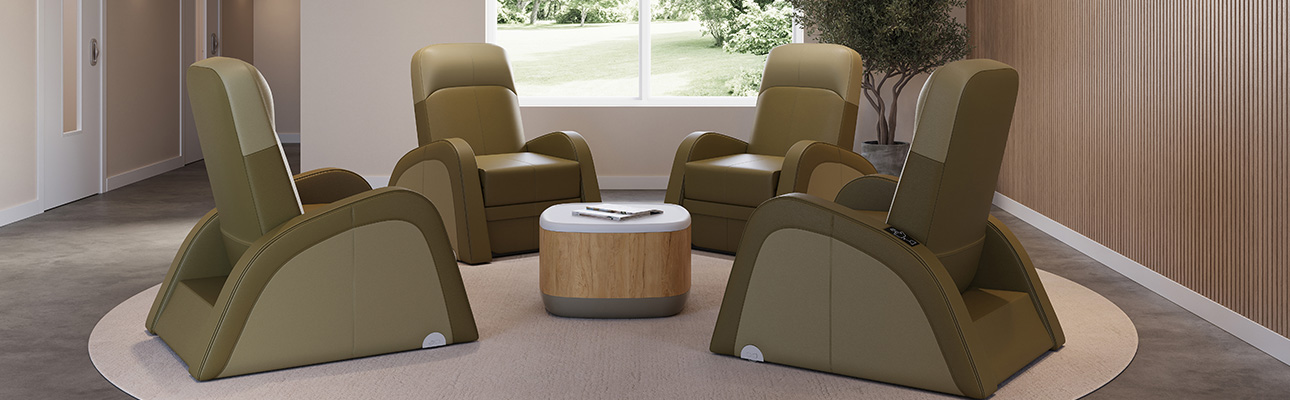
For designers, this might mean creating different seating arrangements within the same environment rather than relying on rows of identical chairs. Providing individual seats, smaller clusters, communal arrangements and quieter spaces can give people greater choice over where they feel most comfortable.
In this sense, flexibility isn’t purely practical. It can also help create a more person-centred experience.
Dignity is another essential part of wellness, particularly within mental and behavioural healthcare.
Spaces that feel overly institutional, restrictive or impersonal can make an already unfamiliar or difficult experience feel even more so. In contrast, environments that feel considered and human can help people feel respected and valued.
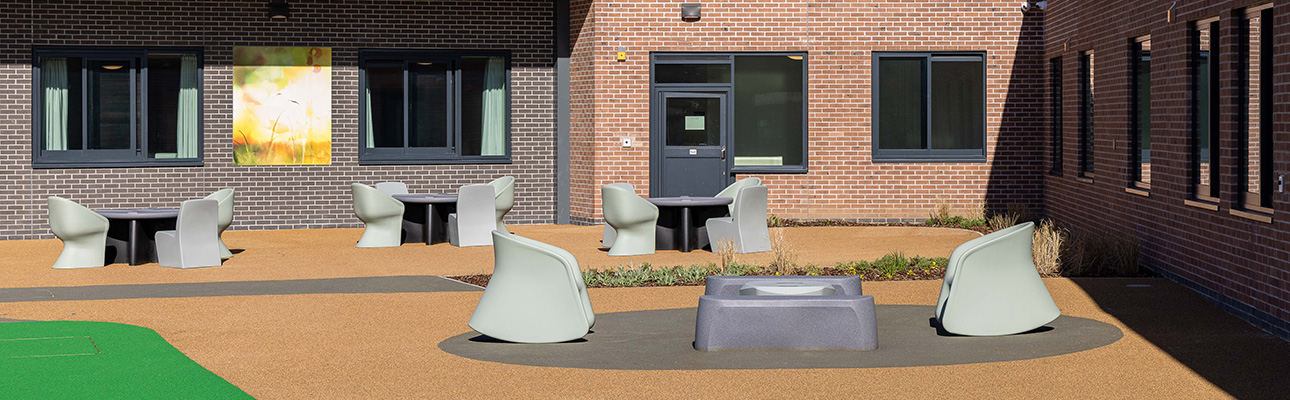
This is where familiar materials, considered colours, comfortable furniture and more residential or hospitality-inspired aesthetics can make a difference.
Creating a more welcoming environment doesn’t mean overlooking the practical demands of a healthcare setting. Instead, it is about finding ways to balance safety and performance with comfort, quality and thoughtful design.
Human connection can be an important part of wellbeing, but people’s needs aren’t always the same.
One person might benefit from sitting alongside family members, peers or staff, while another may need somewhere quieter with a greater sense of personal space. A well-considered healthcare environment should therefore provide opportunities for both.
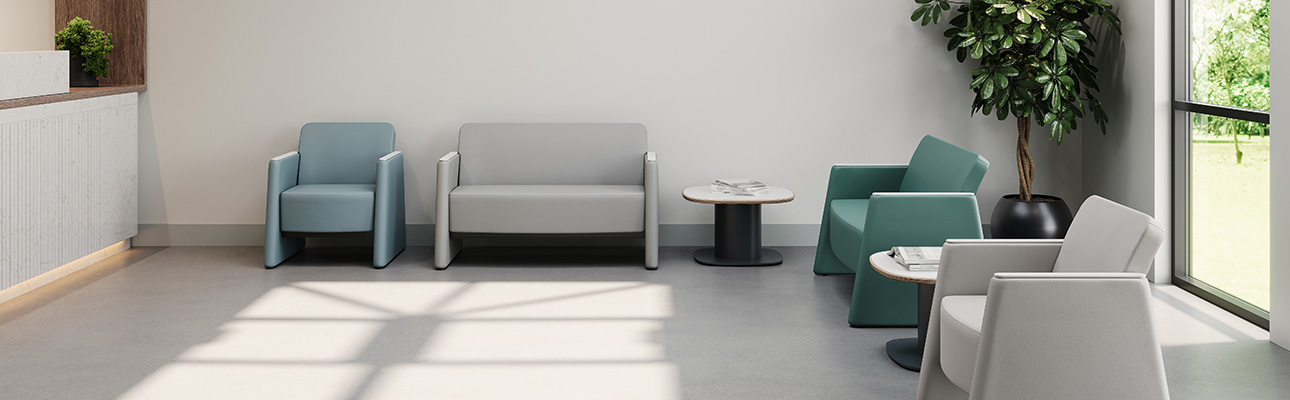
Furniture and layout can help create natural zones for social interaction without forcing it. Sofas and grouped seating can support conversation and connection, while individual seating, high-back designs and quieter areas can offer greater privacy.
Research into supportive mental health environments has similarly highlighted the importance of providing opportunities for both social connection and privacy, giving people greater choice over how they interact with the space and the people around them.
Rather than asking whether a space should encourage interaction or privacy, the better question may be: can it support both?
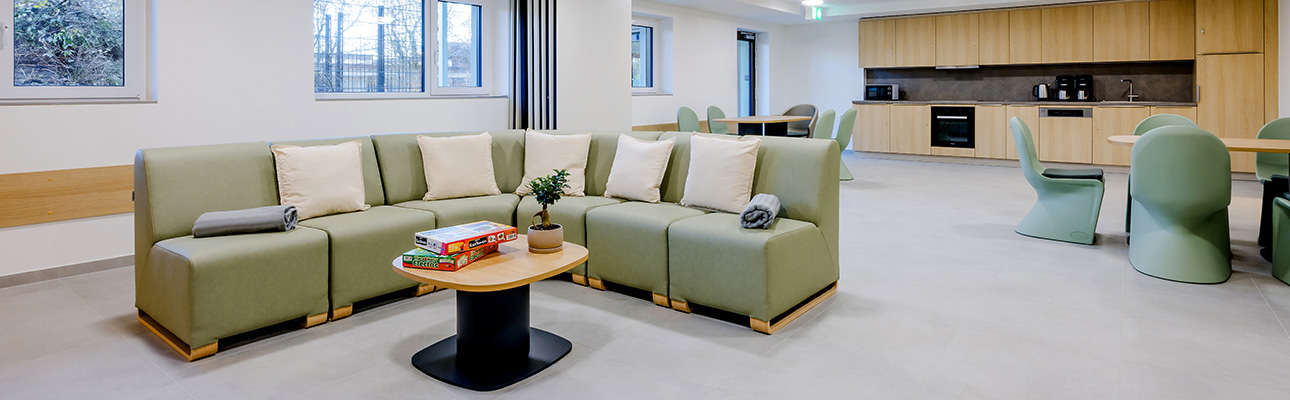
When discussing healthcare design, the patient experience is naturally a major focus. But patients aren’t the only people spending significant amounts of time in these environments.
Staff may work long shifts in demanding circumstances, while family members and visitors may spend hours waiting or supporting loved ones.
Research into adult mental health inpatient facilities has also explored how the physical environment can influence staff wellbeing, satisfaction, performance and perceptions of safety.
Designing for wellness therefore means considering everyone who uses the space.
This might include providing comfortable places for families to sit together, creating spaces where staff can pause during a demanding shift, or selecting furniture that accommodates a wide range of ages, body types and mobility requirements.
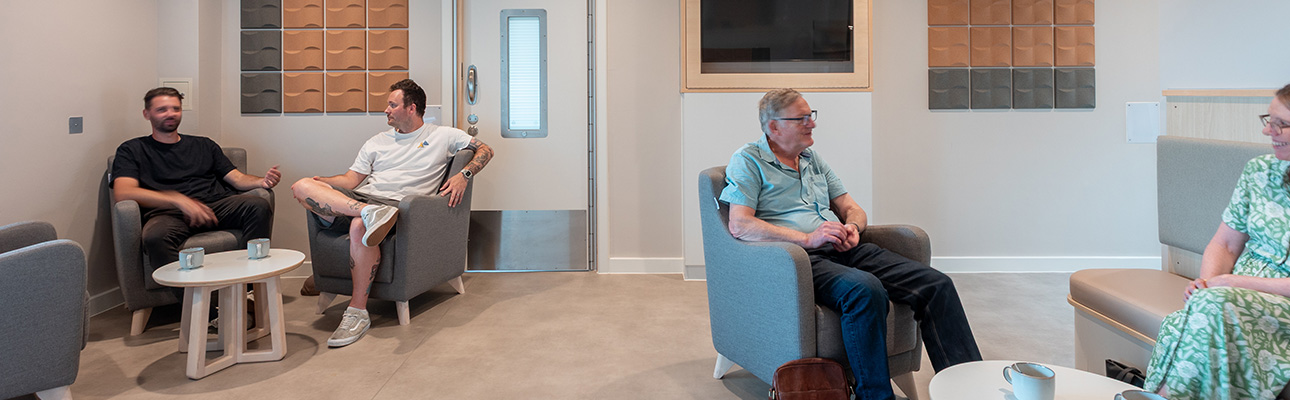
There is no single piece of furniture, colour palette or design feature that creates wellness.
Instead, it comes from considering how different elements work together – safety, comfort, privacy, choice, dignity, durability and support.
For National Wellness Month, it is worth remembering that wellbeing isn’t only about the choices we make for ourselves. The environments around us can play an important part too.
Within healthcare, thoughtful design has the opportunity to create spaces that don’t simply meet functional requirements, but help people feel comfortable, respected and supported at moments when those things can matter most.

